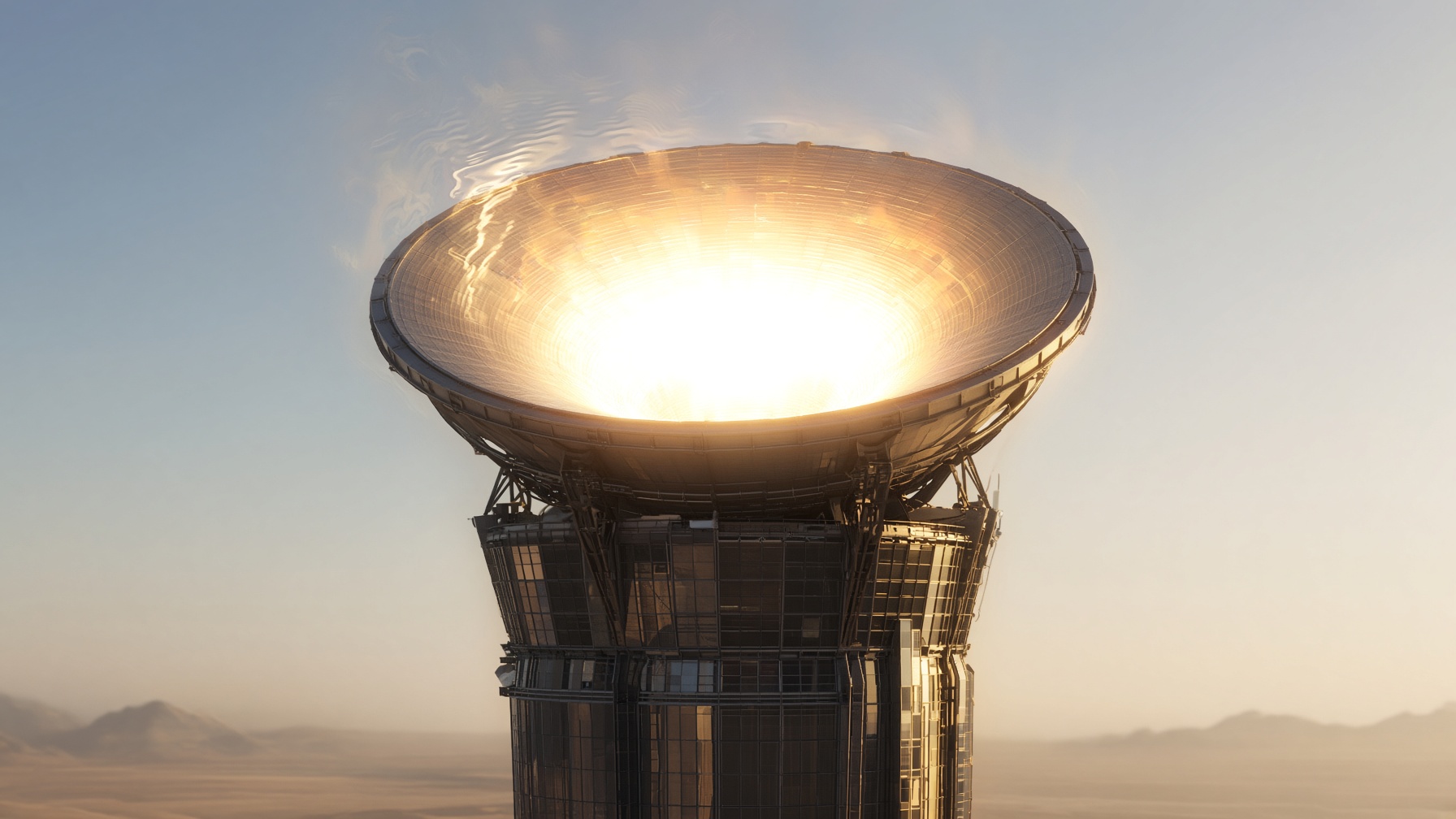
Crown
High-flux receiver
The top of the shaft is a concentrated receiver — heat and light at altitude, not a heliostat death-ray field on the desert floor.
Concept briefing · SPROCKETSAI1
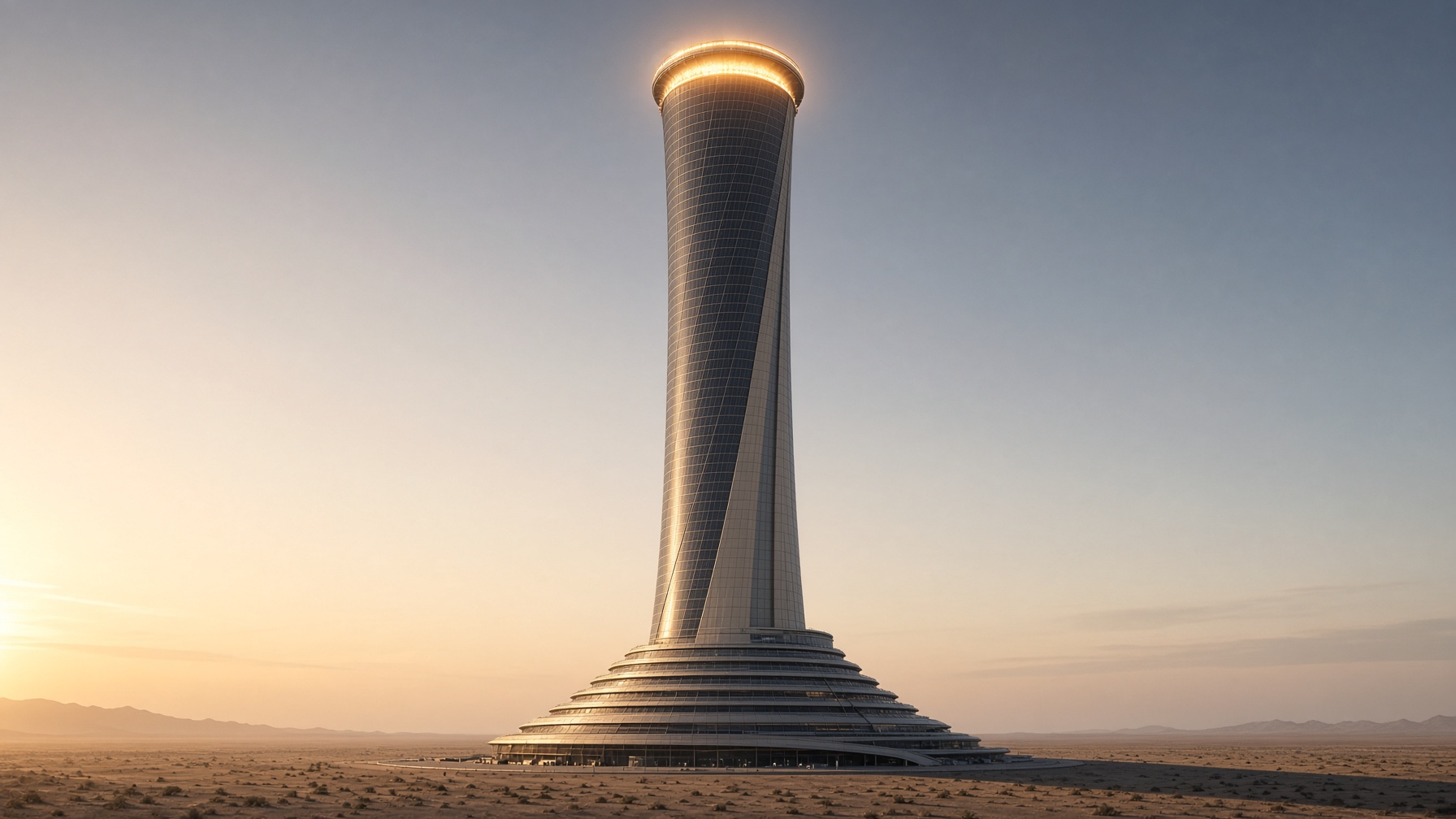
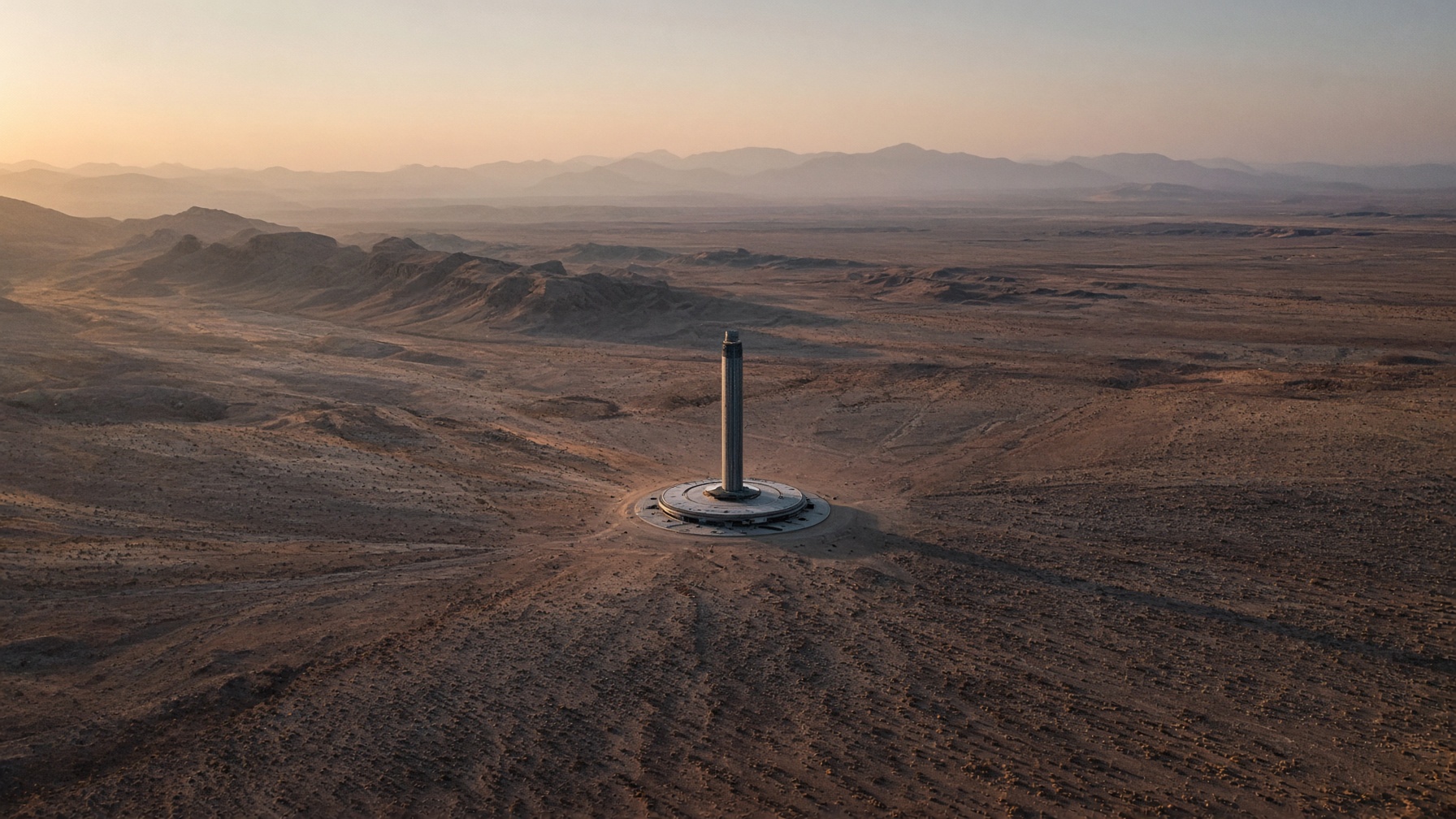
One rotating tower. Photovoltaic skin. High-flux crown. A flared parking podium that charges the cars it holds. Mid-size utility plant, made into a landmark.
Live concept
243 MW
9:15 AM · elev 54° · yaw -41°
Drag to orbit. Scrub the day. Toggle tracking to see the wall go dark when it no longer faces the sun.
Anatomy
500 stories. About 2,000 meters. Not a mirror farm. One branded object that generates, tracks, and parks.
Crown
The top of the shaft is a concentrated receiver — heat and light at altitude, not a heliostat death-ray field on the desert floor.
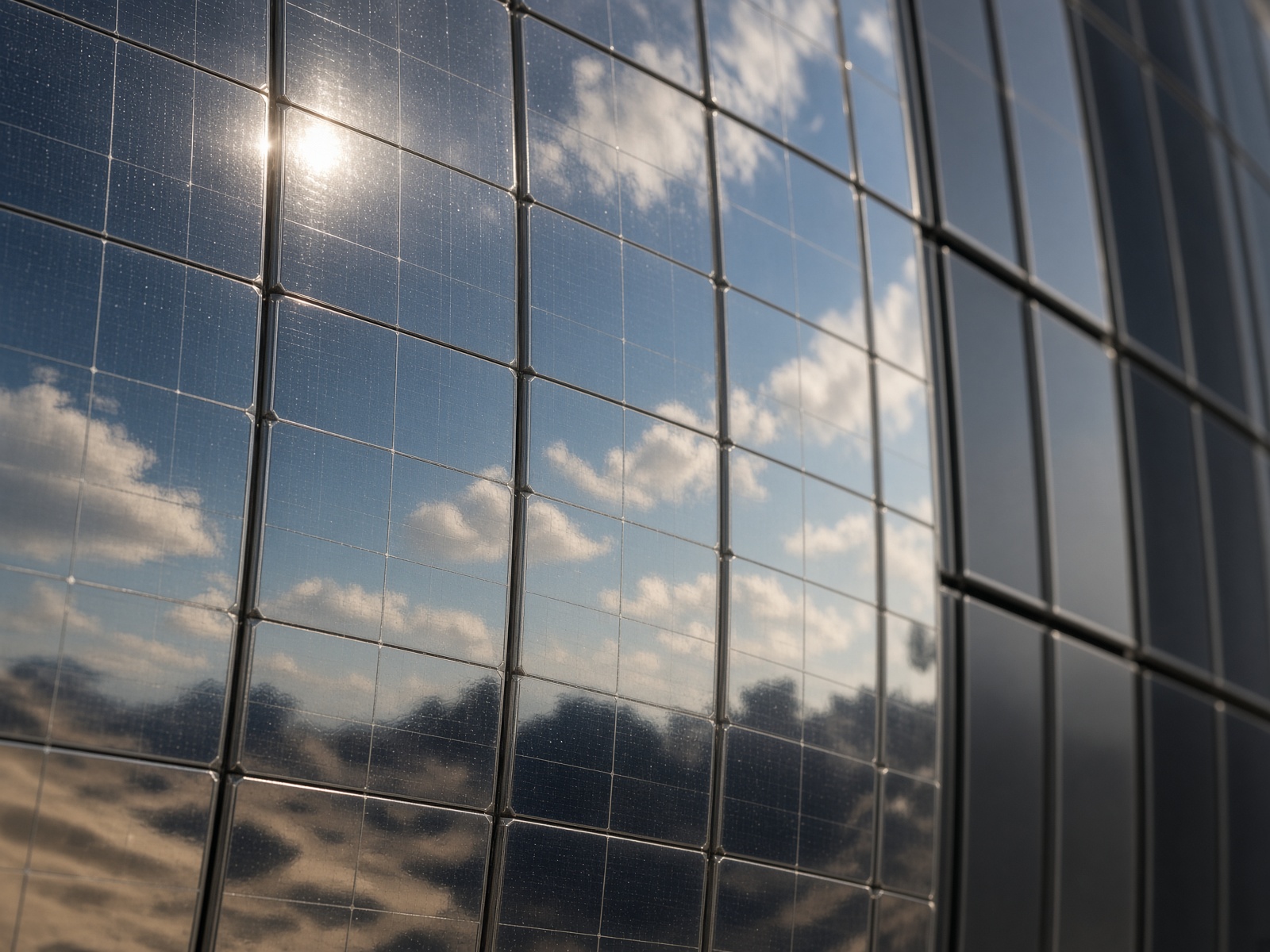
Skin
The whole shaft turns so the PV face tracks the sun. Versus a fixed vertical wall, that tracking is worth about 25–40%. Operating water on the skin: near zero.
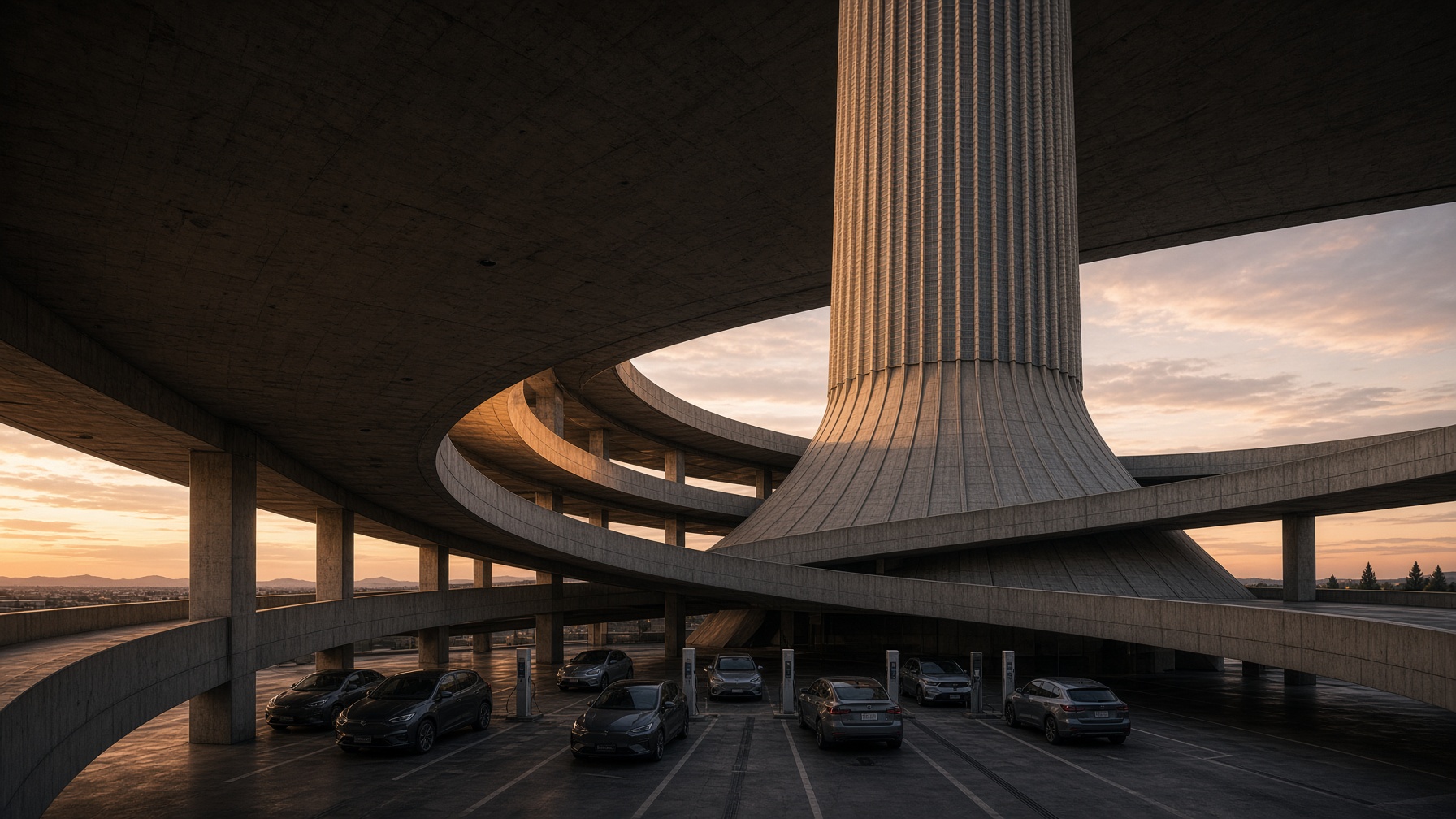
Base
Podium and spiral ramps. Cars park under the generator that fills them. Dual use is the point of the extra steel.
Power
Nameplate 250–350 MW AC. Tracking buys 25–40% versus a fixed vertical wall. Desert capacity factor 28–32%.
Now
243 MW
9:15 AM · 54° sun
Tracking lift
+33%
Versus a south-facing wall
Annual energy
650–900
GWh, desert year
Homes served
60,000–85,000
U.S. average use
Compare
Same power class as Ivanpah (~392 MW), on one rotating tower instead of three towers plus a giant mirror field.
Concept
Built plant
Land
Ground panels in this class eat 1,500–2,000 acres. The tower sits on a circular garage. The desert stays desert.
Relative footprint
Heliostat / panel field
1,500–2,000 acres
Tower podium
~741 acres
Areas drawn by square-root of acreage so the eye reads land, not a bar chart. Podium size follows the parking sliders below.
Parking
Planning density 28–32 m² per stall. Concept capacity 80,000–120,000 spaces. Best use: EV chargers fed by the tower itself.
If one in five stalls is pulling 11 kW, midday load sits inside the tower’s 250–350 MW nameplate. The garage is the offtaker.
Environment
CO₂ avoided
250,000–300,000 t/yr
Versus today’s U.S. grid mix.
Cars off the road
50,000–65,000
Gasoline cars, annual equivalent.
Operating water
Near zero
On the PV skin. No heliostat wash field.
Tradeoff: huge steel and concrete upfront. Energy payback is longer than a flat farm. There is no heliostat “death ray” field.
Jobs
Workforce over time
Peak build
8,000–15,000
Tower, bearing, garage, electrical · multi-year
Permanent crew
400–800
Power, rotation, parking, security, charging
After construction it is capital-heavy, not a huge standing workforce — normal for a power plant.
Honest limit
This is a mid-size utility plant made into a landmark. You pay extra in steel and engineering for height, rotation, dual use, and one branded object on the skyline — not for multi-GW output.
Concept figures for SPROCKETSAI1. Not a financed project, not a siting study. Use them as a brief, not a prospectus.